Now it came to pass in the third year of Hoshea son of Elah king of Israel, that Hezekiah the son of Ahaz king of Judah began to reign. Twenty and five years old was he when he began to reign; and he reigned twenty and nine years in Jerusalem. His mother’s name also was Abi, the daughter of Zachariah. And he did that which was right in the sight of the LORD, according to all that David his father did. – 2 Kings 18:1-3 (KJV)


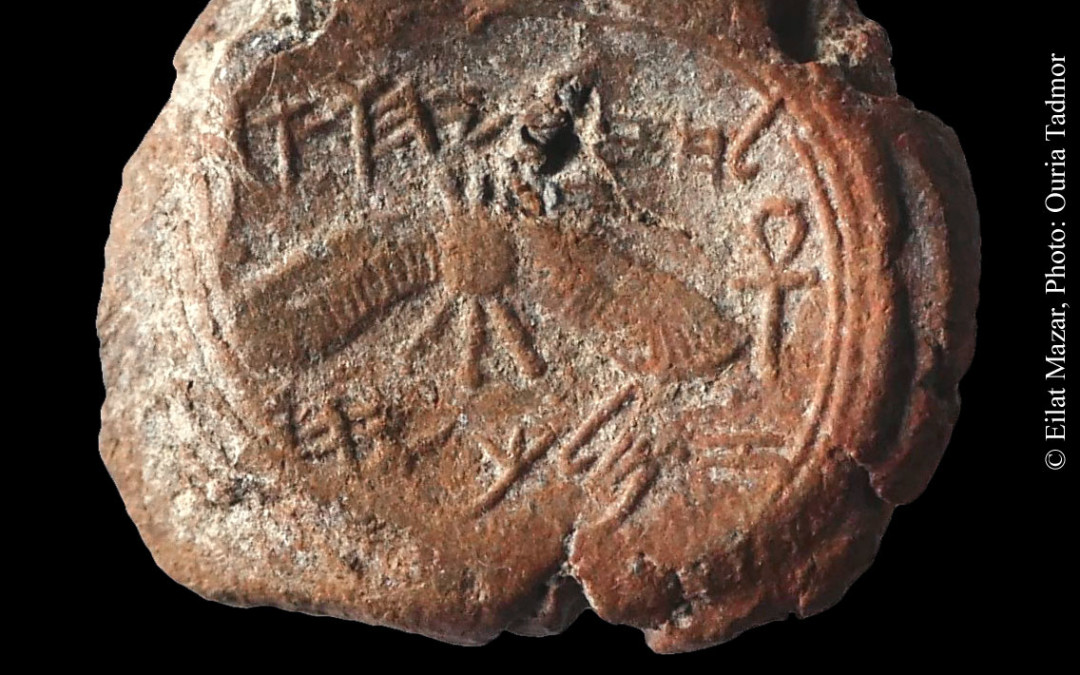
Archaeologists under the directorship of Dr. Eilat Mazar on behalf of the Hebrew University in Jerusalem have recently uncovered and deciphered an impression made by a royal seal of King Hezekiah. He was Judah’s 13th king who ruled from about 727–698 BC. In the ancient world seals were used to stamp an emblem onto clay or other materials. This is the first time a seal impression for any king of Israel or Judah has ever been found in a controlled archaeological context. This impression is about half the size of a USA dime. It adds to evidence for this king and provides more understanding of the daily life and setting of Biblical events.
And the rest of the acts of Hezekiah, and all his might, and how he made a pool, and a conduit, and brought water into the city, are they not written in the book of the chronicles of the kings of Judah? – 2 Kings 20:20
Many travelers to Jerusalem are familiar with Hezekiah because of the popularity of Hezekiah’s Tunnel (Siloam Tunnel), which still displays the remarkable craftsmanship used more than 2,700 years ago to carve an underground passage bringing water into the city of David, sustaining it during times of siege.
One of the major events of Hezekiah’s reign is recorded in 2 Kings 18:13-19:37. The mighty Assyrian army invaded the lands in the region of Judah, destroying the cities and torturing to death the subjects of all who refused to submit. Hezekiah sent them a large tribute (bribe) so they would not destroy his kingdom. When the Assyrians advanced anyway, besieging Jerusalem, Hezekiah knew their only hope was deliverance by the Lord. He put on sackcloth as a sign of grief, repentance, self-humiliation, and submission to God. He went into the house of the Lord and laid before the Lord the Assyrian message demanding surrender, praying for mercy. The Lord answered Hezekiah’s prayer and delivered Judah by an amazing miracle.

The finds of Hezekiah’s tunnel and seal come from a Biblical period that is widely accepted to be historical with many links between archaeology and the Bible. However, in the eyes of most mainstream scholars these links tend to vanish when going back to the times of kings Solomon and David, the Conquest, and the Exodus. Some scholars say that because evidence is lacking, the Bible’s account in these earlier periods must just be myth.
However, others are pointing to evidence that they believe is being overlooked because of assumptions that put these events at the wrong time period in history. And if you look in the wrong time, you won’t find any evidence. A pattern of evidence matching the Bible in an earlier-than-expected period was profiled in our film Patterns of Evidence: The Exodus. Keep Thinking!


